a surprising lack of logic
When I first began reading the recent New York Times article, Not Grass Fed, but at Least Pain Free, by Adam Shriver, I was a happy(ish) lady.[1] Shriver was honestly talking about serious business: Americans eat too much “meat” for their own health and non-human animals (who will become that “meat”) are tortured for the sake of producing it cheaply and quickly. But Shriver lost me when his pro-animal, anti-torture stance brought him to the very strange conclusion that recent experiments of Frankensteinish proportions, which have found ways to genetically engineer the brains of some non-human animals so that their neurological pain receptors are removed, are the solution for how we treat “food” animals.
Shriver celebrates this technology as an advance for the animals, arguing it is wonderful since it can mitigate the animals’ suffering during slaughter. I disagree with him on this one. This “advance” does nothing to change how non-human animals are treated. Rather, it manipulates and objectifies them further, thereby making it easier to continue down paths of denigrating and harming non-human animals for the sake of human comfort and pleasure.
Shriver’s reasoning reflects a clear failure on the part of his own logic neurons on multiple occasions throughout this article. Shriver (and presumably the scientists doing this research) recognize the horrific torture we cause “food” animals to suffer AS WELL AS the fact that eating these animals (and the quantities in which they are eaten) is the cornerstone of all of the current major health epidemics we face in the U.S. Given this, how does he justify spending so much money on research to modify and engineer animals’ neurons? Doesn’t it make more sense to EDUCATE people to change their diets? That would not only eliminate the whole torturing animals part of the equation, but it would also take care of the health aspects Shriver mentions. (Not to mention that ending factory farming–which adjusting brain neurons does not do– is the most important thing we can do for the environment at this time).
Shriver’s lack of logic is again demonstrated when he tells us that this neuron-eliminating technology was developed through animal testing. Shriver reports this as if it is an unimportant detail. If his argument is that animals should not suffer, then why does he unproblematically report on animal-based experiments to prove his point? Medical experiments performed on animals include some of the most painful and horrific practices that humans inflict on non-human animals.
Even the title of this article, Not Grass Fed, but at Least Pain Free, is indicative of Shriver’s lack of understanding about these issues. The title implies that there is a moral superiority to grass fed cows who are killed for their flesh. This is just not so. These animals are still needlessly murdered for the taste preferences of necrovores. I am sure Shriver is assuming (erroneously) that grass fed also always means a free-roaming (or at least not factory farmed) cow. I understand that that scenario is not nearly as horrific as what a factory-farmed cow goes through, but it is still horrific for any cow to be needlessly slaughtered because someone wants (but certainly doesn’t need) to eat him/her.
[For speciesists who can’t clearly understand my argument, here is a similar scenario using people instead:
If you murder your neighbor (lets make your neighbor a “he”) for no reason but that murdering him brings you momentary pleasure you are amoral (and scary). If you imprison your neighbor and leave him malnourished and living in his own feces for 180 days before you murder him then, yes, your neighbor suffered more, but you are still amoral and scary. Saying “Hey, I only murdered him when I COULD have imprisoned and tortured him before I murdered him” does not make you any less culpable for the murder. You are still amoral. And scary.]
And now, for the most illogical point in the article…
Shriver says:
“Given the similarity among all mammals’ neural systems, it is likely that scientists could genetically engineer pigs and cows in the same way.”
If Shriver can admit that there is a similarity among all mammals’ neural systems (meaning, our brains), why does that lead him to the conclusion that the cow’s brain and genetic code should be manipulated for human ends, just as the rats’ brains were? I would have hoped that that acknowledgment of similarity would have lead him to the conclusion that, much like humans, other mammals (and all animals) experience fear, pain, love, loss, connection, joy and a hundred other emotions that make them worthy of a life in which they do not exist purely for humans’ entertainment, science projects, taste and fashion.
[1] I have to add the “-ish” part because Shriver doesn’t tell the whole truth about the number of animals used in scientific testing. Seeing as how our government does NOT classify 90% of all animals used in experiment as “animals” (this includes rodents [i.e. rats, gerbils, guinea pigs, mice, etc.], birds and reptiles) there is no real count of how many animals are used in experiments. Given that Shriver’s story later relies on animal tests done on rats (again, not considered “animals” by the federal government’s standards as outlined in the Animal Welfare Act), it is particularly problematic that he neglects to mention this point.
i dream of greenie’s top six vegetables for vegans

I wasn’t lying last week: every Thursday will be a “top 6” post and I will have guest bloggers when possible.
I feel quite lucky to have the very veggie blogger idreamofgreenie to kick off the top 6 guest blogs! This lady has a slick, witty blog dedicated to vegetables. The theme of each post is a vegetable, links to veg*n recipes abound! If you don’t know what to fix for a dinner party or you just don’t know what to do with the veggies at the bottom of the crisper drawer, turn to idreamofgreenie for inspiration!
And, now, I turn it over to the vivacious veggie blogger, I Dream of Greenie, to give us the scoop in her top six veggies for vegans:
guest blog by idreamofgreenie
I Dream of Greenie’s Top 6 Vegetables For Vegans
#1: Cauliflower
I have developed an intense love for cauliflower and will often choose it over broccoli due to the buttery flavor and rich texture it imparts. An easy way to enjoy the c’flower is roasted with lemon juice, EVOO, salt, pepper and panko (if desired, for an added crunch). Pureed cauliflower with soy milk and herbs also makes for a decadent and healthier alternative to mashed potatoes.
There’s no “white” way to eat this veggie but other ideas include:
–Cauliflower with Almonds, Capers and Raisins
–Curried Cauliflower Soup
–Cauliflower with Oriental Greens
#2: Eggplant
One of the best things about eggplant in my humble opinion is the ability to brilliantly absorb the flavors it is cooked in. And I must say, if you find yourself in New York City, you must dash to Cafe Gitane for a vegetarian couscous dish with eggplant that I dream about (you may have to wait for a table but it is worth it)
While I haven’t figured out how to master Cafe Gitane’s recipe, tantalize your taste buds with:
–Nobu’s famed recipe for mouthwatering eggplant with miso
–Grilled Asian Eggplant with ginger sauce
–Spicy peanut Eggplant
–Eggplant Hummus
#3: Sweet potato
Perhaps my favorite carb, and yes, I’ll admit it, I could eat sweet potato fries by the pound. Fortunately, it is easy to whip up fabulous sweet potato “oven fries” (just slice lengthwise, toss with a touch of oil and seasonings and cook in a 425 degree oven till crispy, flipping once). Sweet potatoes also make a wonderful star for curry dishes and/or a delicious alternative to home fries (saute with onions, garlic and herbs).
There are plenty of other versatile uses of this vegetable that is easily available year round, such as:
–Sweet potato, Carrot, Apple and Red Lentil soup
–Sweet Potato Salad with Apple and Avocado *uses #5 too*
–Maple Pecan Sweet Potato Mash
#4: Artichoke
One of my favorite summer dishes is a simply grilled artichoke with tofunnaise sauce and fresh lemon.
Other ways to eat these leafy delights include:
–Artichoke vegan artichoke pesto
–Stuffed artichokes
–Artichokes with lemon, thyme and garlic
–Vegan Spinach and artichoke dip
#5: Corn
While Government policy has put corn under fire recently (hello high fructose corn syrup), corn in it’s purest form is safe and a delicacy at that!
Kernel Sanders recommends you make:
–Spicy Grilled Corn on the Cob
–Coconut Corn Chowder
–Blue Ribbon Vegan Cornbread
#6: Kale
Not only does kale provide the perfect replacement to boring romaine or iceberg lettuce, this power-food is chock full of Vitamins K, A and C, and is also a good source of fiber, manganese, calcium, potassium and iron.
Get yo greens:
–“Bread” for Ginger Yam Wraps *Also uses #3*
–Mashed Potato Cakes with Onions and Kale
–Kale with Lemon Balsamic Butter
thanks, i dream of greenie!
i have two things to say: “mmm…” and “yum”!!
the proverbial straw is my eyeball
I was recently trapped on a research trip by what was dubbed “Snowpocalypse 2010.” Being trapped by this blizzard has involved 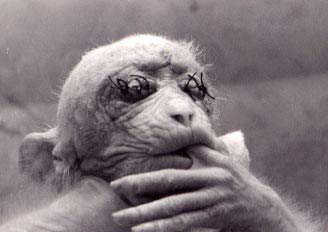 a canceled train, a canceled bus connection, a delayed bus, a missed plane and 8 days added onto a research trip. And now, to add to it all, an eye infection!
In the beginning of this trip I focused on all the great things: interviews with wonderful people, the fact that strangers are letting me couch surf, seeing close friends who live far away, the excitement of being blizzard-ed in and the fact that this is the last leg of data collection for my dissertation. But then (dun dun dun…) the eye infection came in the middle of the night last night. After calling my insurance company and finding out the only clinic within 15 miles of where I am staying that is open late enough to see me and will also treat an eye infection is not covered by my policy, I had a total turn around.
The crying started. I mean, really crying. I thought about all the bad things: I had to fly cross-country for this trip (and I am afraid of flying), my significant other and I broke up while I was out of town, it will be an extra week before I can see my kitten, infighting among my cohort of activists is rampant this month, I can’t afford the extra hotels/ plane tickets/ etc. and I am having major troubles contacting at least a half dozen people I need to talk to ASAP… And when I say the crying started, I mean it. I’ve been gushing.
The above rant was not only for the sympathy –but I do need sympathy! so post me your loving comments below ;)—but to address the “big picture” items this mini-drama has forced me to face. Mostly, the plight of the animals.
My research is concerned with the history of the animal rights movement and so I have been out of town, traveling to different animal rights organizations on archive trips. Today I found a very old newsletter from 1985 about the rescue of Britches. Britches is a monkey that was artificially blinded as an infant as part of some asshole vivisectors’ research. He was resuced by an Animal Liberation Front Cell on April 20th, 1985.
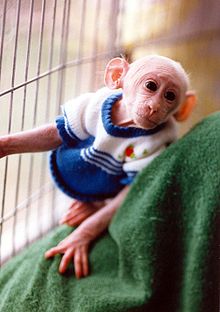 At the moment, my eye hurts. A LOT. (And because the US health care system sucks, it will hurt until I get to go back home in 5 days.) But my eyes are in Disneyland, in comparison to Britches’ eyes. This unparallel comparison is helping me keep my (swollen) eye on the prize—working for a greater good.
I’m not saying that I am not going to cry again tonight. And I am still desperate for a hug from someone who loves me. But Britches has helped me to objectively (even if not emotionally) put my privilege in perspective. I plan to use this realization to inspire me toward action that will utilize my comfort for good. I am sure I will have plenty more pity parties, but I hope the sting in my eyeball (and any other sting I face along the way) propels me to continue committing my energy toward helping non-human animals in their struggle to live free of torture.
the lightning thief had no thunder (and was a bit eurocentric and a little racist)
I am the kind of nerd that wanted to see what promised to be a Harry Potteresqe movie, Percy Jackson & The Olympians: The Lightning Thief, on opening night. I generally don’t know my head from my bum when it comes to movies, so I won’t review it. What I will say though is, don’t go. Or at least wait until it comes out on DVD. (That is, if you have a Netflix account. If you go to Blockbuster and pay by the movie, skip this one).
The movie was mildly entertaining if one accepted it for what it was- a totally cheezy children’s movie that cared nothing for consistency, plot or trusting the audience to have a brain. If it had just been that simple I would have accepted that I was out $35 (I paid for everyone I harangued into going with me. Good thing too, they might have flogged me had I wasted their time and money). I could have accepted all of the above, but the reproduction of racial stereotypes, which seemed to go unnoticed by the directors/producers, was what got to me.

First of all, everything happens in the United States. Funny. Greek gods centering their lives in the U.S. I don’t get it. But back to race…[1]
This movie only portrayed white and black characters. And there were only three black characters at that. It appeared that only one of the gods featured in the movie wasn’t white. And he was in a scene for about a minute with no speaking lines. (Hmmm. Tokenism, perhaps?).
The second black character is Grover (Brandon T. Jackson). He is a doting side-kick/ bodyguard to the main character, always interested in the ladies, full of silly one-liners and the only main character that was half animal. Yup, that’s right. The only black person to get a lead plays an animal. He plays up many stereotypes of black men, while challenging none of them. The only thing they did right with Grover was let him grow horns in the end (a sign of manhood). This development was good only for the pun factor—“horny” –since Grover is always interested in the ladies. And they didn’t even acknowledge the pun, even though it was an easy one.
The final black character is Persephone, wife of Hades, played by Rosario Dawson (who is actually multi-ethnic). She is kept captive by Hades against her will. In other words, she is a slave. Enough said.
[1] Disclaimer: I would like to be clear that when I say “race” I am judging off of skin tone alone—full of all my own biases. Lame, right? I have no clue how these actors self identify their race and/or ethnicity. However, since skin color is how, in western societies, we tend “read” race I am going to go for it and critique the Eurocentric bias displayed throughout this movie anyway at risk of reifying the race-game…
my top six for a feminist reading fix

I received an email from a former student asking for references regarding ethnicity, pop culture and identity. As I culled through my citations I reminisced over all those books that impacted my thinking in meaningful ways. I decided to share some of them with you.
These are the six books that have most shaped my own feminist thinking. I don’t claim they are the most representative of feminist literature. They all came into my life at different times and all made different impacts on my thinking in important ways. I have the books listed below with a little blurb accompanying each as to why I think it’s so great.
This compilation-post seems like such a good idea that I hope to regularly post similar lists from others who are actively involved in the animal rights and feminist communities. I know a top-six list is a little unconventional. It just so happens that I hate almost every prime number, so a top-five list was out 😉
In alphabetical order by author…
Sexual Politics of Meat, Carol Adams
I read this book after a friend told me if I was really a feminist I would be a strict vegetarian too (at the time I went by the label “pescatarian”). This book made me despise all feminists who wear fur and cringe when animal rights activists call people “douche bags.” Oh, and I became vegan right after reading it…
Unbearable Weight: Feminism, Western Culture and the Body, Susan Bordo
I encountered this book toward the beginning of my graduate career. It shaped the way I thought about women and the body and lead me to a lot of fun reading and research. For the next three years my studies centered on the body and I developed and regularly teach a course on the body.
Sexing the Body, Anne Fausto-Sterling
This book brought me from acknowledging that not only is gender socially constructed but a binary system of sex categorization is socially constructed as well. Fausto-Sterling used her background in biology, a deep historical analysis and sociological world-view to break it down and blow my mind!
Feminist Theory: From Margin to Center, bell hooks
This will be one of the most inspired and inspiring feminist texts you ever read. Some of these ideas seem common now, but they started here! It puts into place the necessity of understanding intersectionality (the idea that there are multiple oppressions that work simultaneously). It also made me realize that academic-speak is not for the masses and a true feminism needs to speak to everyone (hence a blog- though the limitations on this medium are noted!)
Toward a Feminist Theory of the State, Catherine MacKinnon
Around the same time as Unbearable Weight came into my life so did MacKinnon’s work. It happened in a contemporary theory seminar my first year of graduate school. As soon as I read the idea that under patriarchy all sex is a form of patriarchal domination I was hooked. Actually, I was hell-bent on combating her. In the end, though, this sex-loving-heterosexual-feminist agreed. (And agreeing didn’t ruin my sex life, so don’t be scared, friends, give MacKinnon a try; and if Toward a Feminist Theory of the State is too harsh, her collected talks, Feminism Unmodified, is more digestible).
Compulsory Heterosexuality and Lesbian Existence, Adrienne Rich in Blood, Bread and Poetry
It’s short, just read it and soak it up!
sticky fingers? check!
A friend of mine once told me he thought vegans’ obsession with food derailed conversations about animal rights—if we could just stop gabbing about the latest new restaurant or recipe at vegan meet ups and organizing meetings we would get a lot more done for the animals. I can see his point. Humans’ obsessions with their bellies have never helped the animals. On the most obvious level, necrovories devour animals for the sake of taste and lots of vegans get distracted by food on a more basic level by just loving it so much (an obsession that seems to emerge for many of us once we adopt a cruelty free diet). I never agreed whole-heartedly with this friend, but I always found merit in the observation. As such, I decided not to blog about restaurants and recipes (a tough task for me since baking is one of the only true talents I have and visions of my next meal consume 60% of my brain-space at all times).

THE cupcake, me, a mirror and a camera
That was all a big lead-in to say that I am going to break my self-imposed rule and talk about a very delicious experience I just had at Sticky Fingers in Washington, D.C.
Yum, yum, yum, yum, yum!
I had a grilled cheese (with Daiya) on multigrain bread with a cup of tomato soup. When I got back to my hotel room I inhaled a most delicious potato salad that I had intended to save for tomorrow’s lunch.
Then, the best part (and my favorite food group):
CUPCAKES!!!
I had a very delicious, moist, inspired chocolate cupcake with peanut butter and chocolate frosting.
I wish I had the skills of a foodie blogger so that I could describe this greatness! The best part is that the restaurant was all vegan, completely affordable[1] and the vibe was relaxed—wireless internet, 50’s diner style seating with puffy vinyl booths and a coffee menu as well. If there were more vegan joints like this in more cities I think that we would all have an easier time getting non-veg friends to take the first bite. Once all the “but it’s too much work to prepare veg*n food” and “what would I eat?” excuses are out of the way (and they would be if this place was in the neighborhood) then we could get down to business and (hopefully) get all this eating animals bullshit to stop.
[1] All told, for $36 we got: a chicken salad sandwich (also delicious), grilled cheese, a cup of tomato soup, a large side of potato salad, chicken Caesar salad, cappuccino, a brownie and a cupcake. Basically, $12/meal, I think you could pull off a delicious $8 meal here no problem.
the human cost of slaughterhouses
When it comes to factory-farmed animals that are rendered for meat, everyone looses. A frien d sent me an article from the LA Times today, which discusses one aspect of the problems associated with the way the U.S. “produces” meat by following the inter-ethnic tensions in one meat-packing town in Nebraska. This article only touches on a much bigger story about the total cost of of the meat industry in the United States.
The intricacies of human labor and the meat packing processes is addressed more comprehensively in Eric Schlosser’s book (which has since become a movie), Fast Food Nation.
Schlosser tells us about a number of other problems with the industry: many workers immigrate with false promises of citizenship from company recruiters, animals are treated cruelly and killed inhumanely, the conditions in slaughterhouses lead to a high risk of food contamination and the human workers in the slaughterhouses are in great danger on a daily basis. To stress this last point, Schlosser tells us:
In 1999, more than one-quarter of America’s nearly 150,000 meatpacking workers suffered a job-related injury or illness…more than five times the national average…The actual number is most likely higher [because]…the meatpacking industry has a well-documented history of discouraging injury reports, falsifying injury data, and putting injured workers back on the job quickly to minimize the reporting of lost workdays.
This problem is so serious that in 2005 the Human Rights Watch issued a statement identifying meat-packing plants the most dangerous factory job in the U.S. Not only are their jobs physically dangerous, but I imagine being forced to kill and dismember other lives and bodies so many hundreds of times a day has a psychological toll on people. I don’t know that any slaughterhouse provide free psychiatric treatment to workers to help them cope with the horrifying nature of their job. The violent nature of the industry and the abuses that surround the treatment of workers has effects on the communities that illustrate what a horrible industry this is. In one study, researchers found “that slaughterhouse employment increasestotal arrest rates, arrests for violent crimes, arrests forrape, and arrests for other sex offenses in comparison withother industries.” [1]
I recently asked someone from the Humane Society of the United States why he thinks the animal protection movement meets so much cultural resistance. One reason he suggested is that the horrors of animal industries are so horrific that the average citizen doesn’t actually believe it when they hear about it; they assume that there are already laws to protect against such blatant injustice and cruelty. I, however, don’t think that this is the case. Call me a pessimist, but I think I am merely being a realist. I know plenty of people who read articles and books that discuss these topics, watch exposes of factory farms and slaughter houses, link environmental devastation to factory-farming, hear all the news of people dying of food-born illnesses that are generated because of slaughterhouse and factory farm practices and know that animals and humans alike are exploited for the sake of big-business animal enterprise profits. Many people are also aware that the greatest health epidemics in the country are directly tied to two things that Americans consume more of now than ever before: high fructose corn syrup[2] and the flesh of dead animals. Somehow, when their stomachs grumble, they still manage to eat a hamburger without reflecting on all the death, pain, torture, manipulation and exploitation that every bite engenders.
[1]Fitzgerald, Amy J., Linda Kalof and Thomas Diets. (2009). Organization & Environment, 22: 158-184.
[2]Greg Crister’s book, Fat Land , is a great fast read on the obesity issues and high fructose corn syryp.
where did all the feminist dolls go?
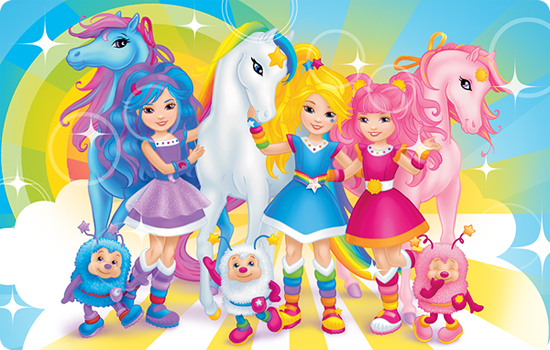 Feminsite blogged on a very scary new development: Rainbow Brite got all revamped to be re-released by Hallmark. I know, this should be a happy thing, right? I went to the new website for Rainbow Brite, and while she isn’t quite the horror show that is posted in the picture on Feministe, the new Rainbow Brite certainly isn’t anything that children can identify with. Like all other popular plastic dolls I’ve seen lately, the new Rainbow Bright is some sort of thin representation of what a little girl should become, if reality TV show producers had their way. If, like Cara from Feministe and myself, you had the Rainbow Bright sheets and dolls you are mourning the loss of your childhood friend who, apparently, has been resurrected form the dead only to be eaten up and puked out by Barbie and the Bratz.
And since Hallmark is all about the change, and Hallmark is changing Rainbow Brite’s sidekicks, where is the racial, ethnic and gender diversity? Just saying…
Screw you, Hallmark!
Miss Bright, I’ll miss you.
misrepresented. again.
 Once again, the New York Times has printed a very silly article that misrepresents the concerns of vegans. James Kanter’s article, Stop Eating Meat and Save the Planet?,was published in today’s Green Inc. column of the NY Times. The article discusses the conversations in Copenhagen last month regarding a push to have people eat less meat in order to reduce green house gas emissions. Kanter’s aim on the surface seems to be to present both sides of the argument. But he fails. Kanter misrepresents, or simply doesn’t understand, the argument on the vegan side while nearly unproblematically presenting the perspective of the beef industry. Whether it is due to perspective or ignorance I am not sure, but he is writing in the NY Times, so I am holding him accountable.
Kanter’s Summary:
Kanter doesn’t cohesively outline the argument on either side, presenting only select ideas from each side. He presents two arguments on the vegan side. According to him: we think methane from cow burps is the number one cause of greenhouse gas emissions and that some of us are pushing for governments to campaign for one meat free day a week among its citizens. He then presents the beef industry’s counter arguments. First, that there is no proof that one meat-free day a week will have any good. And the second beef industry point? He quotes this ridiculous comment:
“‘Would, for example, wild herbivores and termite mounds take over many of these environments, and end up producing as much greenhouse gases as domestic ruminants?’ Mr. Seré asked. ‘We frankly don’t, and can’t, know that yet.’”Following this, Kanter plays it safe and takes to citing middle ground solutions. He then closes with quotes from a Livestock lobby, giving those who make big bucks off of animal torture the last word.
Oh, come on, Kanter! Are you for real?
I’ll start with the easy stuff. To the point that there is no proof that one meat-free day a week on a large scale will help the environment: there is plenty of proof it will help in terms of reducing risk of obesity, heart disease and cancer—the biggest health epidemics in the US. That seems reason enough to me, though I am sure it would help the environment as well.
My next objection is that Kanter takes the beef industry so seriously in this article and seems to trust their perspective. Yes, this is the same silly industry that has something stuck so far up its ass it actually sued Oprah for libel for saying she never wanted to eat another hamburger. This is the same industry that is regularly found covering up contaminated meat and processing downed cows. Kanter really should try for better sources.
I am also little miffed that Kanter chooses a single group of cult like vegans to represent us all. On the vegan side, he uses the followers of Supreme Master Ching Hai as representative of vegans. I will let that slide for the moment though since I don’t really know much about the Supreme Master’s teachings.
The greatest issue of this article is that Kanter doesn’t understand the arguments for how beef production leads to environmental degradation. Cow burps? Sure, that releases methane, but that is not the whole story and he seems to be inviting readers to interpret the vegan environmental argument as silly. The whole reason that beef production in the US is the number one contributor to environmental degradation is because of all the waste across the board that goes into it: excessive water use for the factory farmed cows and the crops they eat (calorie for calorie, many more crops are needed to raise cattle that will later be turned into “food” for people, than would be used if we just fed people crops directly), chemicals for crops and the toxins the over-antibiotic ridden bodies of the cows are leeching into the soil and water, the extra trucks and machinery that are used to feed, transport and slaughter cows pollute the air, soil and water, and the toxic waste that cow poop develops into when cows are factory farmed. Much of this leads directly to greenhouse gas emissions.
Next, Kanter actually presents someone’s counter argument that “wild herbivores” might overrun the earth and burp in mass to destroy the environment. Ridiculous. I would rather take my chances on the termite take-over than settle with the current state of affairs because, frankly, even my imagination can’t foresee a future in which the “wild herbivores” have run a muck and the environment has been depleted by their burping.
Finally, we get to the last point of the article in which Kanter again quotes Carlos Seré (of the termite-burping fear mongering) who is the director general of the International Livestock Research Institute in Nairobi:
[Mr. Seré] said environmental campaigners should keep in mind that the “biggest concern of many experts regarding livestock in developing countries is not their impact on climate change but rather the impact of climate change on livestock production.”Seré says we should care more about how the environment effects livestock than how livestock effect the environment. If livestock production degrades the environment, then we need to be concerned with the later to approach the former. And this is not a chicken-or-egg argument I am bringing up. In this scenario, we know which came first.
And then he continues with Seré to close up:
The “hotter and more extreme tropical environments being predicted threaten not only up to a billion livelihoods based on livestock but also supplies of milk, meat and eggs among hungry communities that need these nourishing foods most,” he said.Kanter, use your brain before quoting such illogical crap. If we didn’t deforest and deplete these environments for the sake of mass beef production by using the land for mono-cropping livestock feed and clear-cutting land for cows to be factory farmed (think McDonald’s and the Amazon Rainforest), this area could be used to produce food sustainably, which could then be used to feed people. Let’s not forget, calories are wasted when used to feed cows that will later become “beef,” as many fewer crops are needed to feed people than are needed to feed that cows that are later used to feed people. And mass producing food allows for mainstreaming production and downsizing the labor force, so I think my suggestion would actually improve the livelihoods of many more people.
pigs, pork and petri dishes
In a recent article, “Scientists turn stem cells into pork,” AP medical writer, Maria Chang, describes some new research that may make factory farming a thing of the past:
(AP) – “Call it pork in a petri dish – a technique to turn pig stem cells into strips of meat that scientists say could one day offer a green alternative to raising livestock, help alleviate world hunger, and save some pigs their bacon.”
And so we have it: there is technology that can potentially generate the amount of “meat” from one pig that it currently takes a million slaughtered pigs to produce. (I’ll call this “in vitro” meat, though I don’t know there is a universal term for it yet). Factory farming causes the greatest loss of life to animals because of the huge numbers of animals that are victims of this system. Replacing rotting flesh with Petri dish cells seems like a no-brainer win for the animals. PETA has offered $1 million to the first person who can develop in vitro meat and get it into the market place by 2012.
It’s that second part, perfecting in vitro meat so that people will actually buy it that is the last hurdle. Given how many animal lives could be saved by in vitro meat shouldn’t all of us animal rights activists be shifting our attention to the endeavor of selling in vitro meat to a public audience? And if we shifted our focus we would likely not meet as much resistance as we currently do. Science would support us and the public loves science. Scientists are envisioning miracle foods, as one scientist interviewed by Chang explains: “You could possibly design a hamburger that prevents heart attacks instead of causing them.”
As utopian as in vitro meat might sound in terms of saving millions of animal lives, feeding starving populations and preventing the extreme environmental degradation associated with factory farming, I can’t help but feel uncomfortable with this technology. I certainly am not going to start an anti in vitro meat campaign (though I am sure there are reasons to, like unforeseen health consequences and reliance on technology for food security) simply for the reason that animal lives are saved and the environment is protected, but I just can’t seem to really get behind it.
First, this seems like a supremely complicated and expensive way to deal with the problems associated with eating animal flesh at the rate the Western world does: chronic disease, cancer, public health epidemics (e-coli, mad cow disease), environmental degradation, animal cruelty. Why go through all this trouble when the clear, easy, inexpensive and side-effect free approach is to promote vegetarian and vegan diets? If, as a society, we stop torturing, slaughtering and binging on animals we will have done the number one thing we could do to reduce: 1. The major health epidemics in the west (heart disease, diabetes, obesity); 2. The needless suffering and slaughter of non-human animals and; 3. Our contributions to climate change (beef production in the US alone is the number one contributor to greenhouse gas emissions worldwide). Oh, and we will also have more farmable land to grow food for human populations—in fact, the US alone could produce enough calories in food to feed the world’s starving populations. (If we could kick Monsanto out of business and practice sustainable farming, we’d really have world hunger on lock down!)
I also think that there is something very disturbing in the reasoning behind producing “super-food” but not rejecting the idea of meat. Meat is the rotting flesh of murdered animals. Meat is proof that we are a cruel culture that forgot how to love and value life. Meat is proof that we accept oppression and violence. What would we say if a proposed solution to rape was to provide punching bags shaped like women and disembodied vaginas for men to destroy and beat on and violate? Would we accept the ideology of violence against women if we could reduce the symptoms associated with it? I don’t think so. And is that not what we are doing with in vitro meat? Those fighting for animal rights can’t forget that the key to our movement in the long run is dismantling the idea that non-human animals are objects and property for human use and consumption. If we do, not only will other abuses toward animals continue (experimentation on animals, circuses, zoos and fur, to name a few), but the next time animal bodies can be exploited for human goals, they will be.
So, to wrap up: in vitro meat is kind of creepy. Animal liberationists may want to get behind it (or at least not reject it) for the immediate benefits it has for the animals, but don’t stop your liberation work to push for in vitro meat—the idea that animals are ours to use is still alive and well and we need to keep fighting.

 Vegina